Here’s a single page with book and story reviews I’ve published on this and other channels.
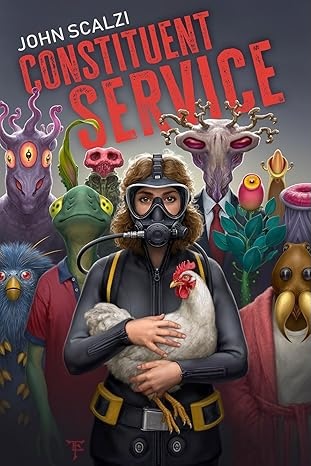
An entertaining, quick read, Scalzi proves once again he can translate alien cultures and slap-stick situations into compelling character tales that leave the reader wanting more.
The writing is clean and crisp, even as it dances about alien physiology, cultural foibles, and unpronounceable names. Our protagonist is a recent Tufts graduate who hoped for diplomatic work, preferably off-world, only to end up as the community liaison for a local politician in Earth’s most heavily alien-populated district.
The dialog and action is reminiscent of a timeless Monty Python sketch; imagine John Cleese as the alien office manager insisting the newest employee perform karaoke as the only human in an alien dive bar. It’s all good fun and team building until the sewers explode!
No spoilers, so I’ll just say you should read it if you want something light-hearted but still relevant in today’s culture wars where we let little things like race, sexual preference, or political beliefs separate us. This is a tale of beings working and living together across species. Maybe we can learn something from science fiction.
Highly Recommended
Available on Amazon and Apple Books
Book 1 of The Imperium
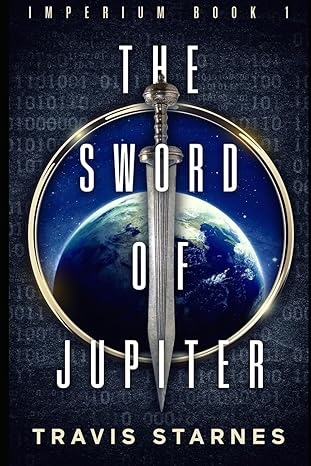
Ky, a genetically tailored human from the future and adequate pilot, is selected for the dubious honor of piloting mankind’s second Faster Than Light ship. The first exploded for reason unknown. Command selected an “acceptable but not irreplaceable”asset for their next test.
However, Ky is not _just_adequate. He was average in the context of a group of genetically engineered who represented the pinnacle of human evolution. That includes an AI embedded within him. His AI is past-due for a periodic reset, to prevent it progressing to sentience.
An experimental ship’s drive, a genetically engineered human, and embedded AI in his head, what could go wrong?
Everything.
Ky finds himself flung through space and time. Instead of jumping to Alpha Centauri, he is plummeting toward Earth and none of the space infrastructure he expects is present to dispatch assistance.
The Sword of Jupiter is a well-written, fast-paced story that keeps readers engaged and crafts characters to care about. The tropes of time travel began before A Connecticut Yankee in King Arthur’s Court by Mark Twain, but this is a different take. While there are some echos of Twain’s critique for the romanticized view of the Middle Ages and chivalry, Starnes has less satire regarding the social hierarchies, the role of the Church and the limitations of “tradition”. The Sword of Jupiter does touch on some social commentary, but does it with a deft touch that works within the story.
For readers who enjoy series, this is the first book and sets the stage for a solid run.
Recommended.
Available on Amazon.
 Charlie Forêt